
Article
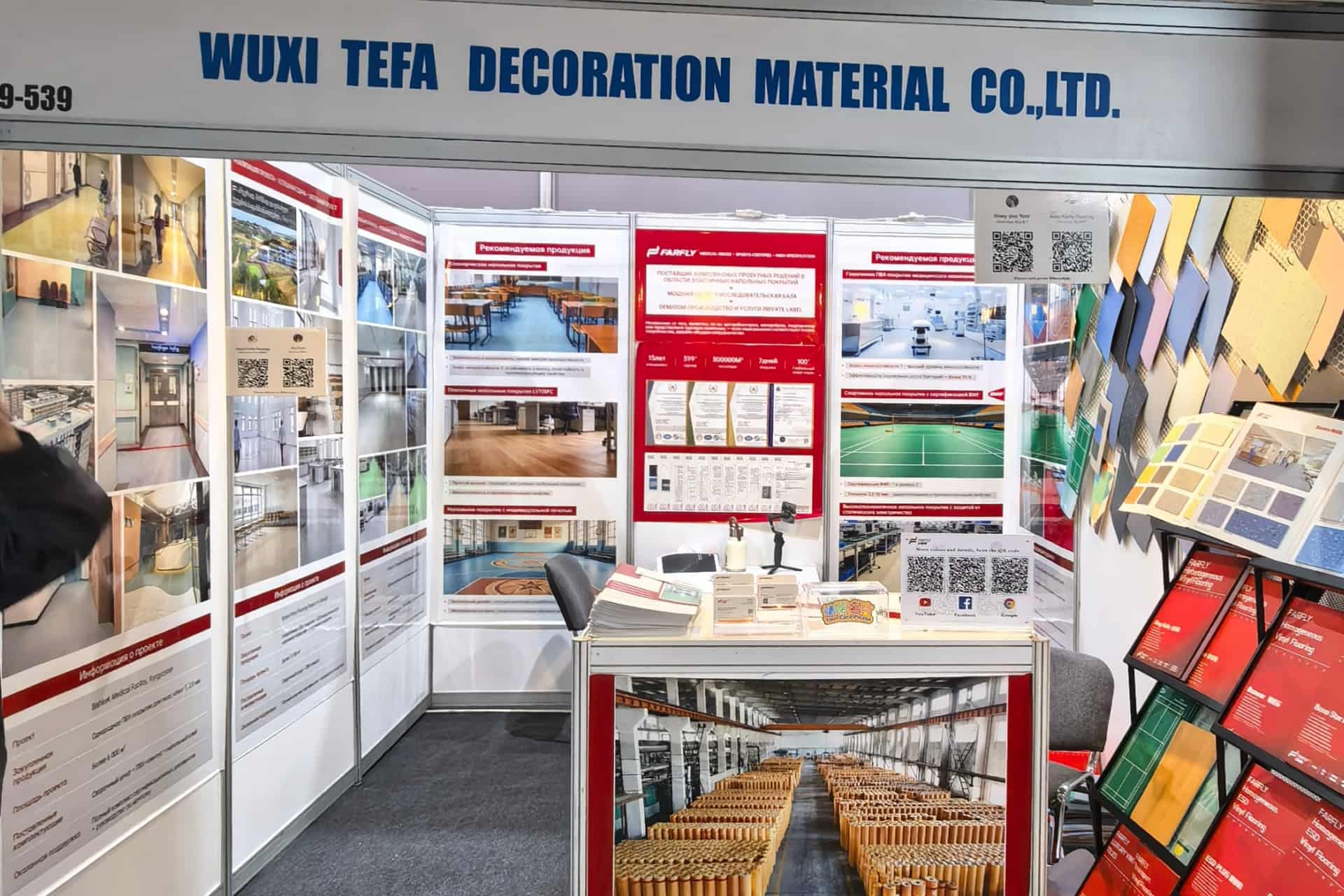
FARFLY Exhibition Review | KazBuild 2026: From On-Site Discussions to Project Delivery FARFLY concluded its participation in KazBuild 2026 on September 4, 2026. During the exhibition at Hall 9, Booth 9-539, our team met with project contractors, distributors, procurement teams and facility owners to discuss current flooring requirements and potential cooperation. FARFLY (Wuxi Tefa Decoration Material Co., Ltd.) is a Project-Focused Resilient Flooring Provider for Healthcare, Sports Venues & High-Specification Environments. Our participation focused on three core solution areas: hospital and medical flooring, sports flooring, and other high-specification flooring for critical and demanding environments. At the exhibition, we presented more than PVC flooring samples and product catalogues. We discussed application-driven product selection, product-specific compliance documentation, customized product development, auxiliary-material coordination, installation support and reliable delivery planning. For project customers, this approach can shorten the time required to compare products and verify technical information. It can also reduce the costs and risks caused by incorrect product selection, missing accessories, repeated procurement, installation rework and delivery delays. What Happened at KazBuild 2026? KazBuild 2026 took place from September 2 to 4 at the Atakent International Exhibition Centre in Almaty, Kazakhstan. According to the official post-event announcement, KazBuild 2026 brought together 411 companies from 27 countries, including 161 first-time exhibitors. KazBuild and Aquatherm Almaty, which were held at the same time, jointly featured 631 companies from 34 countries and attracted 8,578 professional visitors. Before the exhibition, FARFLY published its KazBuild 2026 exhibition preview to explain why we were participating. Our objective was to understand the actual requirements of customers serving Kazakhstan and the wider Central Asian market and to discuss cooperation based on compliance, delivery and project success. The discussions at KazBuild confirmed that flooring customers need more than a product quotation. They need to know whether the proposed flooring is suitable for the application, whether the test reports correspond to the exact product and model, whether the supply plan can support the construction schedule, and who will coordinate the response if a problem occurs. During and after KazBuild 2026, FARFLY shared the short exhibition video on Facebook and YouTube Shorts. The video gives customers who could not attend the exhibition a direct view of FARFLY’s on-site presence and activities. Additional product-selection, installation and flooring application content is available through the FARFLY Video Centre. What Flooring Solutions Did FARFLY Discuss at KazBuild 2026? FARFLY organizes its solutions around actual applications. Instead of asking customers to begin with an isolated product name, we fir...
FARFLY to Showcase High-Specification Resilient Flooring Solutions at KazBuild 2026 FARFLY (Wuxi Tefa Decoration Material Co., Ltd.), a Project-Focused Resilient Flooring Provider for Healthcare, Sports Venues & High-Specification Environments, will participate in KazBuild 2026 from September 2 to 4 at the Atakent International Exhibition Centre in Almaty, Kazakhstan. Visitors can meet the FARFLY team in Hall 9, Booth 9-539 to discuss three core solution areas: hospital and medical flooring, sports flooring, and other high-specification flooring for critical and demanding environments. Rather than presenting flooring as a standalone material, FARFLY will focus on the issues that matter throughout a project: application-based product selection, verifiable technical performance, product-specific compliance documentation, customized product development and reliable supply execution. Bring your project requirements. FARFLY will provide a more verifiable and deliverable flooring solution. About KazBuild 2026 KazBuild 2026 is the 32nd Kazakhstan International Building & Interior Exhibition and will take place from September 2 to 4, 2026, in Almaty. Held annually in Kazakhstan’s main business city, KazBuild has been an important meeting point for the country’s construction and interior industries since 1994. The exhibition covers construction materials, finishing materials, floor coverings, interior products, equipment, tools and related technologies. According to the official KazBuild 2026 announcement, the exhibition brings together manufacturers, material suppliers, development companies, design organizations, distributors and industry experts involved in residential, commercial, industrial and infrastructure construction. For FARFLY, KazBuild provides an opportunity to meet companies serving Kazakhstan and the wider Central Asian market, understand their actual project requirements and explore long-term cooperation based on compliance, delivery and project success. Why FARFLY Is Participating in KazBuild 2026 For contractors, distributors and project owners, the price of flooring is only one part of the procurement decision. A product may become a project risk if its performance is inconsistent, its technical claims cannot be verified, its documentation does not match the exact model, or its delivery schedule cannot support the construction programme. Project customers therefore need clear answers to several questions: Is the flooring suitable for the actual application? Can the required performance be supported by test data? Are the test reports connected to the proposed product and model? Can the supplier support material submittals and project approval? Can production and delivery meet the project schedule? Can several products, colours and accessories be loaded together? Can non-standard requirements be developed into a deliverable product? If a problem occurs, is there a clear team responsible for coordinating the response? ...
Yes. FARFLY has its own production base in Wuxi, China, but we are not just a flooring manufacturing factory. FARFLY focuses on providing high-standard resilient flooring system solutions by combining our manufacturing capabilities with comprehensive project services and system support. We have not only production capacity, but also product development capabilities. This allows us to better control product quality, production schedules, batch stability, color consistency, and delivery lead times. At the same time, what we provide to customers goes far beyond flooring products themselves. From early-stage product selection, technical documentation, and sample support to project execution support such as matching adhesives and accessories, installation guidance, technical support, and project coordination, we aim to help customers complete their flooring projects more efficiently and reliably. With 300,000 square meters of ready stock, a daily production capacity of up to 30,000 square meters, and 400+ product test reports, FARFLY can provide stable, fast supply and project delivery capabilities to meet the needs of both regular distribution orders and high-standard commercial projects. Therefore, if your concern is whether you can purchase directly from the source — the answer is yes. But what FARFLY can provide is not only manufacturing, but a complete, reliable, and practical flooring system solution. FARFLY — Ground for Confidence.
Article Summary: FARFLY completed a 15,000 m² hospital flooring project at Jo Ann University Hospital in Tbilisi, Georgia. The project used 2.0 mm homogeneous vinyl flooring and included product selection, technical documentation, auxiliary materials, international logistics, and on-site installation by FARFLY’s overseas construction team. This case demonstrates FARFLY’s ability to deliver complete PVC hospital flooring solutions for international healthcare projects. A hospital flooring project is never simply a matter of supplying rolls of material. Product selection, color coordination, subfloor preparation, wall-coving details, welding, installation quality and communication between different countries can all affect the final result. For the Jo Ann University Hospital project in Tbilisi, Georgia, FARFLY provided more than PVC flooring products. From sample confirmation and technical documentation to auxiliary materials and overseas installation, the company delivered a coordinated flooring solution covering approximately 15,000 square metres. The project demonstrates what FARFLY can offer international contractors and distributors beyond product manufacturing: practical project support, complete material coordination and professional installation services at the project site. Project Overview Project: Jo Ann University Hospital Location: Tbilisi, Georgia Contract signed: March 26, 2024 Project area: Approximately 15,000 m² Application: Hospital and healthcare spaces Main flooring: 2.0 mm homogeneous flooring Project contractor: Local Georgian engineering contractor Installation: FARFLY installation team dispatched to Georgia Construction status: Installation completed in early 2025 About Jo Ann University Hospital Jo Ann University Hospital is a well-known medical institution in Tbilisi with a long history in cardiology and cardiac surgery. The medical centre was established through the efforts of American philanthropist Jo Ann McGowan and Georgian surgeons. Its original mission was closely connected with improving access to pediatric cardiac care and surgery for children with congenital heart conditions. After becoming part of European University, the institution began operating under the name Jo Ann University Hospital and continued developing into a multidisciplinary medical facility serving both inpatient and outpatient needs. The Client Needed More Than a Flooring Product One of the main challenges in the local market was the limited availability of experienced installers for resilient hospital flooring. Professional vinyl flooring installation teams were difficult to find locally, labor costs were high, and the expected construction progress could not easily meet the project schedule. The customer therefore needed a supplier that could take responsibility for more than production and delivery. FARFLY agreed to dispatch an experienced installation team from China to Georgia. This overseas const...
FARFLY Compliance Update | SGS Test Results for Homogeneous ESD PVC Flooring Tile: Electrical Resistance, Chemical Resistance and Ten Restricted Substances FARFLY has received two new test reports issued by SGS covering electrical resistance, surface electrostatic voltage, staining and chemical resistance, and ten RoHS-related restricted substances for a Homogeneous ESD PVC Flooring Tile. The results add product-specific evidence to FARFLY’s compliance documentation system and provide more detailed information for product selection, technical review and material submittals in electronics manufacturing facilities, cleanrooms, laboratories, medical equipment areas and other static-sensitive environments. FARFLY believes that customers need more than a product labelled “anti-static” or “ESD.” They need a clear connection between the proposed product, applicable test methods, measured results, installation materials and actual project requirements. More information is available through FARFLY’s Anti-static Flooring range, its guide to What Is ESD Vinyl Flooring and How Does It Work?, and the existing Test Reports centre. What Product Was Tested? The tested sample was identified as a FARFLY Homogeneous ESD PVC Flooring Tile with a Product Specification of 600*600mm. The principal sample and report information is: Sample Name: Homogeneous ESD PVC Flooring Tile Product Specification: 600*600mm Material: PVC Other Information: Brand: FARFLY Sample Source: Customer-delivered Date of Receipt: 2026-07-26 Test Report No.: XMIN2607001827CM01_EN, XMIN2607001827CM02_EN This product-to-report-to-project approach helps contractors, distributors and project owners reduce document mismatches, repeated submissions and technical approval delays. It makes test documentation useful for decision-making and delivery rather than treating it only as promotional material. What Were the Resistance to Ground, Surface Resistance and Surface Electrostatic Voltage Results? The reported mean value for Resistance to Ground was 1.59×10⁵ Ω, the reported mean value for Surface Resistance was 2.39×10⁵ Ω, and the reported Surface Electrostatic Voltage was -7 V. Test Item Test Method Result Resistance to Ground IEC 61340-4-1:2015 1.59×10⁵ Ω Surface Resistance IEC 61340-2-3:2016 2.39×10⁵ Ω Surface Electrostatic Voltage SJ/T 10694-2022 -7 V For Resistance to Ground and Surface Resistance, the values shown in the summary are mean values calculated from six measurements. For these two resistance tests, the report records a Specimen dimension of 310mm×310mm, 2pcs. It also states that the sample was adjusted for 48h under environmental conditions of temperature 23°C and humidity 12.0% RH. For Surface Electrostatic Voltage, the report records a Specimen dimension of 310mm×310mm, 2pcs, with a Testing Environment of Temperature: 23.0°C and Relative Humidity: 51.0%RH. IEC 61340-4-...
Article Summary: FARFLY supplied a complete hospital flooring system for the new Hospital del Altiplano in Puno, Peru. The material package included homogeneous vinyl flooring, PVC ESD flooring, adhesives, welding rods, copper foil, installation tools, and customized accessories. Through technical documentation, tender support, and ongoing project coordination, FARFLY helped improve installation readiness for this major EsSalud healthcare project serving more than 290,000 insured people. According to a press release published by the Peruvian government platform gob.pe on March 29, 2026, the new Hospital del Altiplano had reached 97% physical progress and entered the final wrap-up and deliver pasae. The hospital is expected to benefit more than 290,000 insured people with high-complexity medical services and advanced medical technology, including magnetic resonance imaging and CT equipment. Located in Puno at an altitude of approximately 3,827 meters above sea level, the new six-level hospital is positioned as an important healthcare facility for southern Peru. The project is designed to improve access to specialized medical services and reduce the need for patients in the region to travel to Lima or Arequipa for complex treatment. For this project, FARFLY supplied a flooring material package including homogeneous vinyl flooring, PVC ESD flooring, adhesives, wall adhesive, conductive adhesive, welding rods, copper foil, installation tools, and related accessories. More Than Flooring Rolls: A Complete Project Supply Approach Hospital flooring projects are different from standard commercial flooring orders. A hospital includes many functional areas, such as corridors, wards, operating rooms, CT rooms, equipment rooms, and floor-to-wall areas. Each area may require different flooring performance, installation methods, and supporting accessories. For general medical areas, homogeneous vinyl flooring provides durability, easy cleaning, and long-term maintenance value. For areas with electrostatic control requirements, such as CT rooms or equipment-related spaces, PVC ESD flooring must be installed as part of a complete conductive system with conductive adhesive and copper foil. This is why FARFLY focused not only on supplying flooring rolls, but also on supporting the full material system required for project installation. Supporting the Contractor from Tender to Project Execution During the early stage of the project, FARFLY helped the client prepare professional product documents and technical parameter sheets that could be used for project communication and tender submission. For international healthcare projects, complete and clear technical documentation is essential. It helps contractors, project owners, and supervisors better understand product specifications, application areas, and system requirements. FARFLY also improved the availability of product information through its website, allowing project-related product documents and specifications ...

In November, China Metro Group's office showroom was re-decorated specifically to promote their corporate image. Preferred PVC flooring. Because it is made of polyvinyl chloride as the main raw material, after high-temperature extrusion, calendering, UV light curing, or hot-pressing, it becomes a kind of flooring material. PVC flooring has many features, such as: waterproof, fireproof, anti-bacterial, wear-resistant, easy to clean, environmental protection, and so on. But its most important feature is that it is very suitable for renovating old floors. PVC flooring can be installed directly onto the old tiled floor without removing the old floor, saving time and money and effectively shortening the project cycle. At the same time, the installation process is very simple, does not need to use cement and other building materials, does not need to carry out a large area of sanding and painting, will not raise dust to pollute the environment, and effective protection of the environment. In addition, PVC flooring can be selected in different styles and colors according to different needs. It matches the overall color palette of the Metro Group showroom, and PVC flooring can also simulate marble, wood grain, and other colors and materials, making old floors look brand new and vibrant. Finally, it is important to note that before installing PVC flooring, the existing floor must be inspected and treated to ensure that it is level, dry, and free from cracks, etc. In short, PVC flooring is a very suitable flooring material for renovating old floors, which can bring many irreplaceable advantages, such as saving time and effort, environmental protection and easy cleaning, diversified styles to choose from, etc., and can also effectively guarantee the renovation effect.
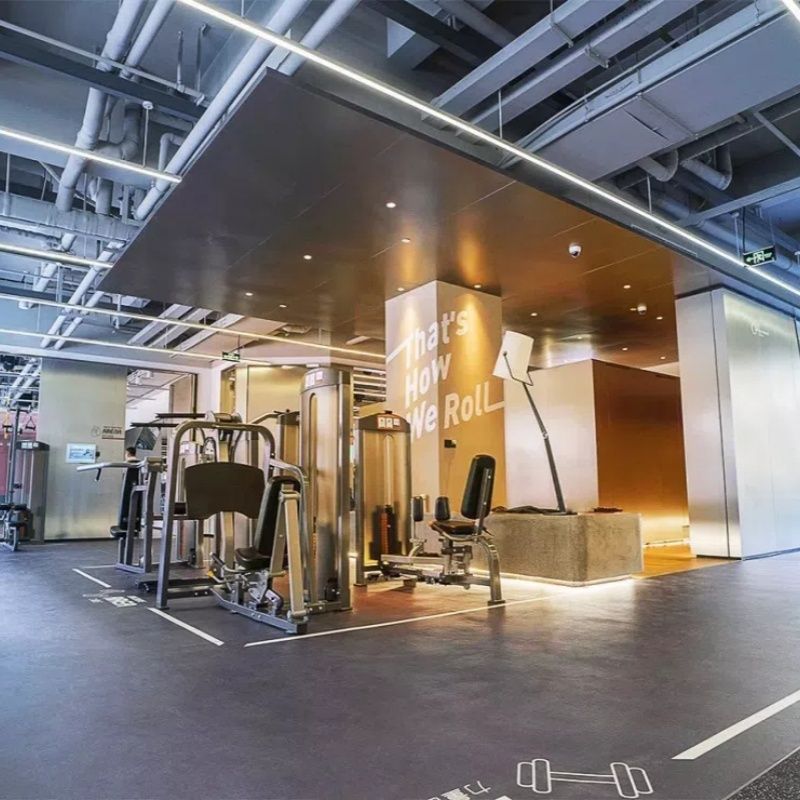
LEFIT Fitness Club has more than 1000 branches. Nowadays, people's lives are relatively fast-paced, very little time to go to the gym, most people are in a sub-healthy state, so fitness is still very necessary.LEFIT's philosophy is to let everyone enjoy the right to exercise equally.LEFIT fitness clubs use different types of our FARFLY brand flooring products to meet the needs of different areas. 1, Strength equipment area PVC flooring for the movement of a larger amount of strength equipment area, by increasing the thickness of the foam layer, strengthens the distribution of the fiber layer. Make PVC floor structure with vibration absorption function, can absorb the outside world impact energy, thus playing a protective sportsmen's joints, so that people are not easy to carry out large-scale sports by other injuries. 2, yoga room Yoga and other specialized areas of the human body need to be in contact with the floor for a long time, the floor the softness and sound absorption requirements of the higher. FARFLY flooring is soft, and comfortable, and can significantly reduce the long-term standing on the human back, legs, and ankles caused by the pressure. At the same time, sound absorption and noise reduction effects are obvious and can reduce the outside noise interference, for fitness enthusiasts to provide a quiet and concentrated training environment. 3、Equipment area The equipment in the equipment area has a greater impact on the floor, which requires higher wear resistance and stability of the floor, FARFLY floor adopts a double-layer stable structure and ensures the floor is flat and stable without deformation through seamless connection technology, which improves the wear resistance coefficient and avoids warping. Creating a durable training surface.
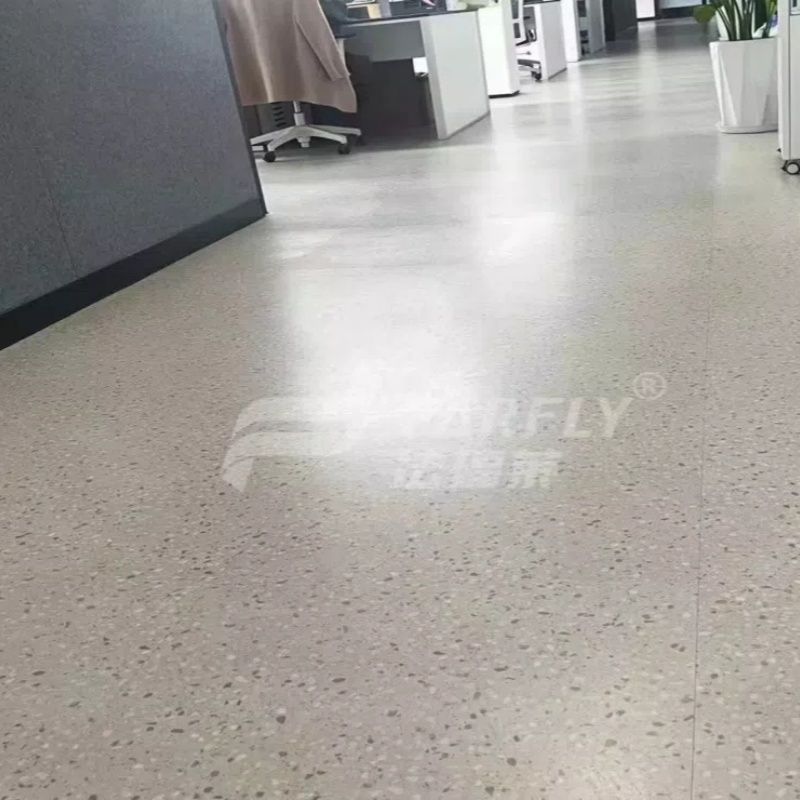
In the modern office environment, the choice of flooring is not only about aesthetics but is also closely related to the health and work efficiency of employees. In recent years, PVC commercial flooring, with its unique advantages, has gradually become the new favorite of the office floor. This is the office on the third floor of the Design Institute. Farfly commercial flooring was chosen and the pattern is Terrazzo. The thickness used is 2 mm. PVC flooring is a new type of environmentally friendly flooring. Combining the texture of natural stone with the lightness of plastic, it is not only stylish and versatile but also easy to install and low maintenance. Most importantly, PVC flooring has excellent slip, wear, and stain resistance, making it ideal for busy office environments.
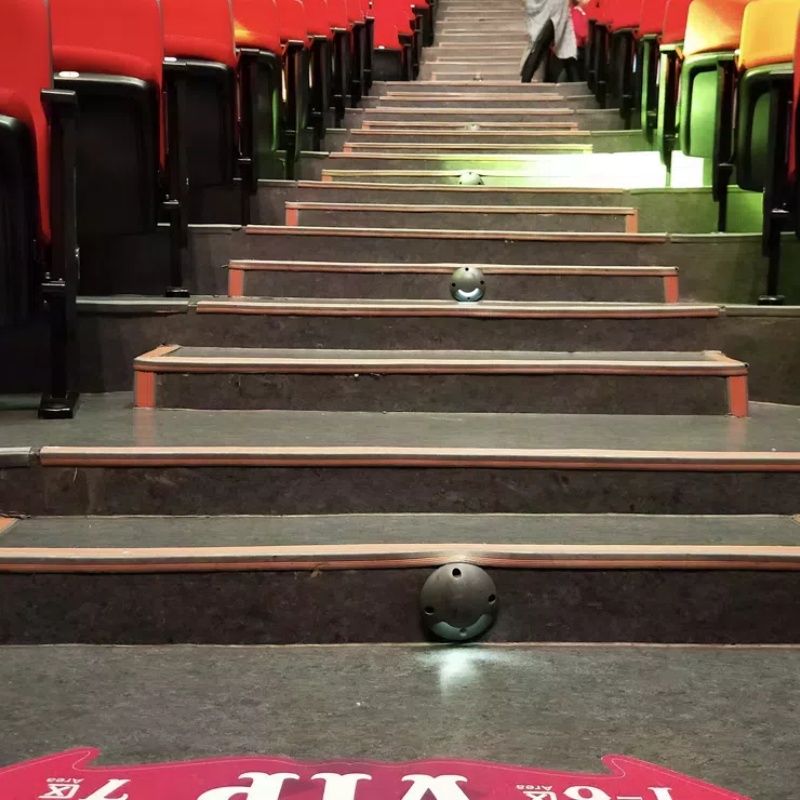
With the continuous development of the film industry, the cinema as a place to watch films is gradually upgraded and improved. Among them, the choice of PVC flooring has become a new trend in cinema decoration. Farfly has developed a series of PVC flooring suitable for cinemas, subways, aircraft cabins, and other environments through 3 years of repeated experiments. This series of PVC flooring has excellent abrasion resistance. Cinema flooring is a high-frequency use area, which is subjected to a lot of walking by audiences and staff, so it needs a wear-resistant flooring material. PVC flooring adopts special materials and processes, which makes it have excellent wear-resistant performance, even if it is used for a long time, it is not easily worn and damaged and can maintain a beautiful appearance. Secondly, PVC flooring has a good sound insulation effect. When watching a film, the audience wants to be completely immersed in the world of the film without being disturbed by external noise. In addition, PVC flooring has anti-slip properties. Cinema floors often have a variety of liquid spills, such as drinks, popcorn, etc. PVC flooring after special treatment, the surface is uniform and flat, with strong anti-slip performance, which can reduce the risk of people slipping, to ensure the safety of the viewing process.
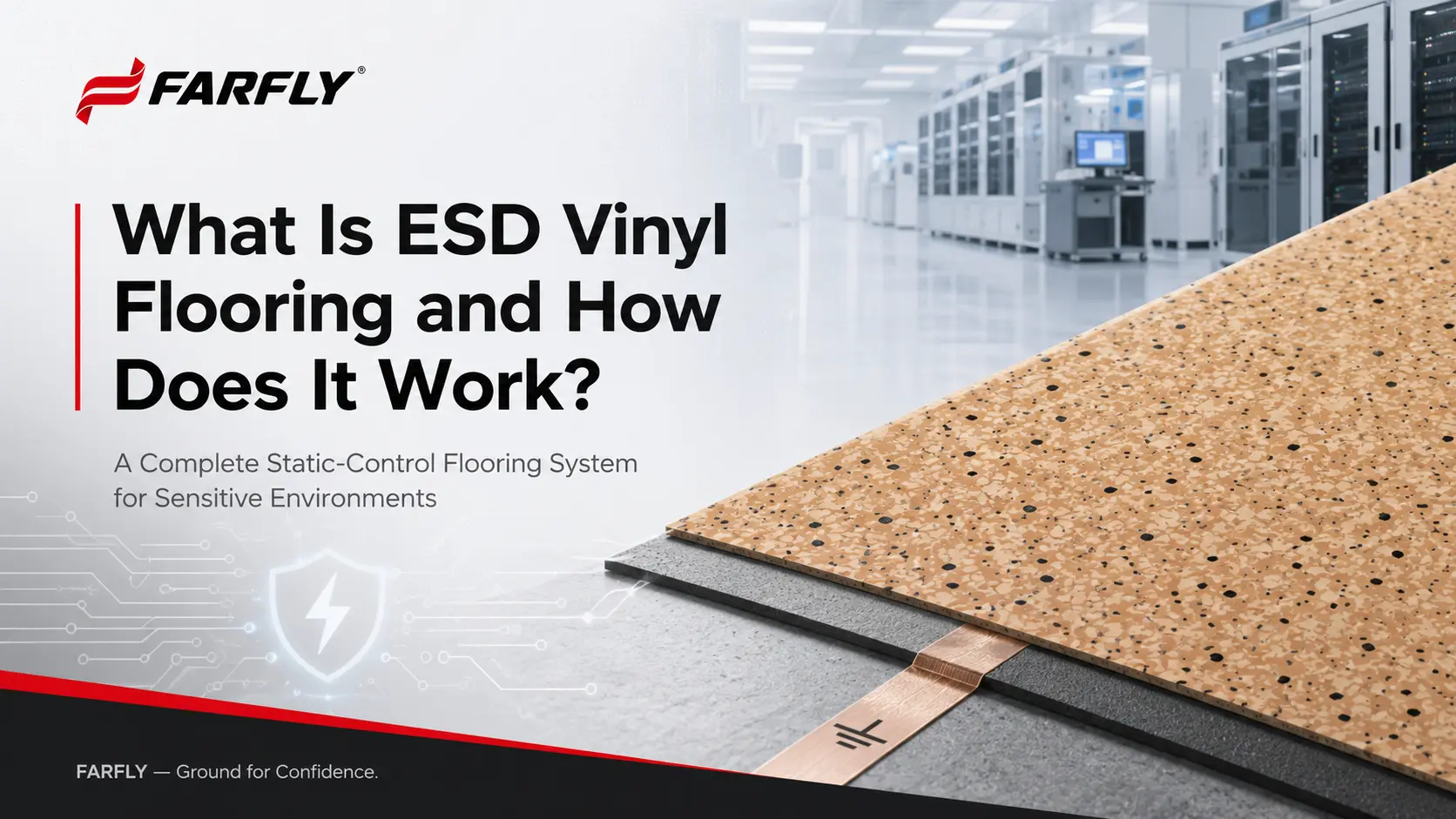
Static electricity may seem harmless, but in electronics manufacturing, laboratories, cleanrooms and data centers, even a small electrostatic discharge can damage sensitive components, interrupt operations or create costly quality problems. ESD vinyl flooring is designed to reduce these risks. It provides a controlled path for electrical charges to move from people, carts and equipment toward a designated grounding point. However, the floor does not work alone. Its effectiveness depends on the complete system, including grounding, footwear, installation materials and regular testing. This guide explains how ESD vinyl flooring works, what it is made of and how to select an appropriate flooring system for your facility. In many industries, static electricity is not just a small inconvenience. It can interfere with sensitive equipment, damage electronic components, affect production stability, or create risks in controlled environments. That is why ESD vinyl flooring is widely used in electronics manufacturing, laboratories, cleanrooms, medical equipment areas, data centers, server rooms, and other static-sensitive spaces. But ESD flooring is often misunderstood. Some buyers simply ask for “anti-static flooring,” while others believe that installing one type of vinyl floor is enough to solve every static-control problem. In reality, ESD vinyl flooring is not only a product. It is part of a complete flooring system. At FARFLY, we provide ESD vinyl flooring together with matching conductive adhesive, copper foil, welding rods, installation accessories, technical data, and project support to help clients build a more reliable static-control flooring solution. What Is ESD Vinyl Flooring? ESD vinyl flooring is a resilient flooring material designed to control electrostatic charges. Compared with standard vinyl flooring, ESD vinyl flooring contains conductive or static-dissipative components that allow electrical charges to move through the flooring in a controlled way. It is commonly referred to as: ESD vinyl flooring Conductive vinyl flooring Static-dissipative vinyl flooring Anti-static vinyl flooring However, these names do not always mean the same thing. “Conductive,” “static-dissipative,” and “anti-static” may represent different resistance ranges and different levels of ESD performance. For this reason, buyers should not rely only on the product name. The correct choice should be based on the project’s technical requirements, resistance range, grounding design, installation system, and applicable testing standards. Why Is Static Electricity a Problem? Static electricity is usually generated when two materials come into contact and then separate. This is known as the triboelectric effect. In daily working environments, static charges can be produced by many normal activities, such as: Walking across the floor Moving carts or chairs Rolling equipment through a room Handling plastic p...
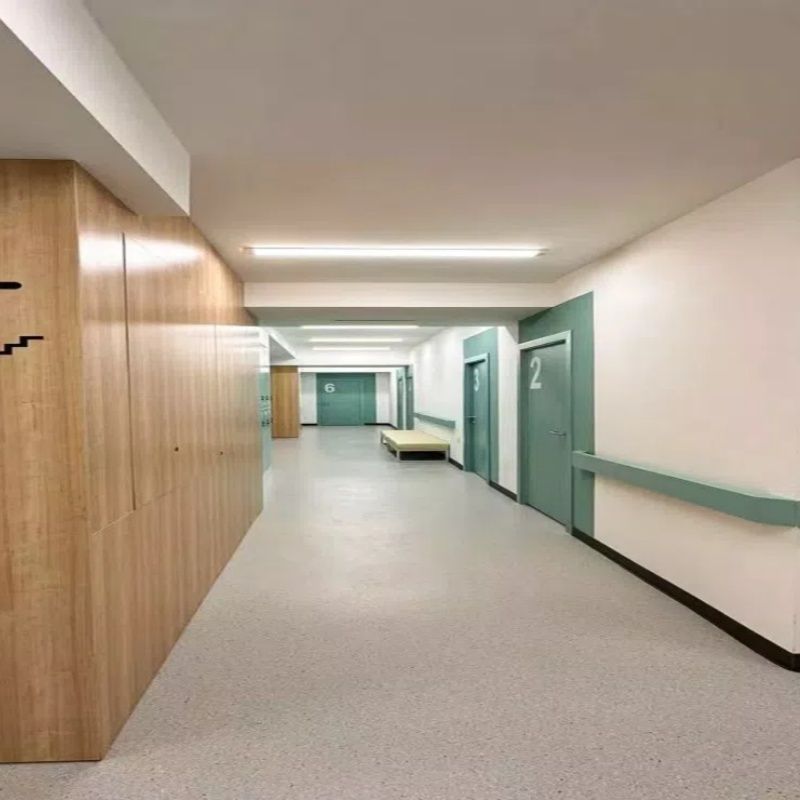
Homogeneous flooring is an essential part of modern hospitals, which has the advantages of anti-slip and anti-drop, easy to clean and disinfect, noise and dust reduction, rich colors, environmental protection and energy saving, anti-electricity and anti-magnetic, as well as strong adaptability. This is a hospital that works with Farfly. The flooring used is the BN model, and wear-resistant is T-class. It can protect the safety and health of patients, improve the treatment effect and satisfaction of hospitals, and meet the needs of modern hospitals for environmental protection and energy saving. Therefore, choosing the right PVC flooring with proper design and application is one of the most important measures to improve the overall level and service quality of hospitals.

Add : No.5 Huaqing Intelligent Park, Huishan District, Wuxi, Jiangsu, China
Please read on, stay posted, subscribe, and we welcome you to tell us what you think.


Copyright © 2026 WUXI TEFA DECORATION MATERIAL CO., LTD. All Rights Reserved.
Sitemap | Blog | Xml | Privacy Policy
 Network Supported
 English
 français
 español
 português
 العربية